Wednesday, June 21, 2017

Mobile I

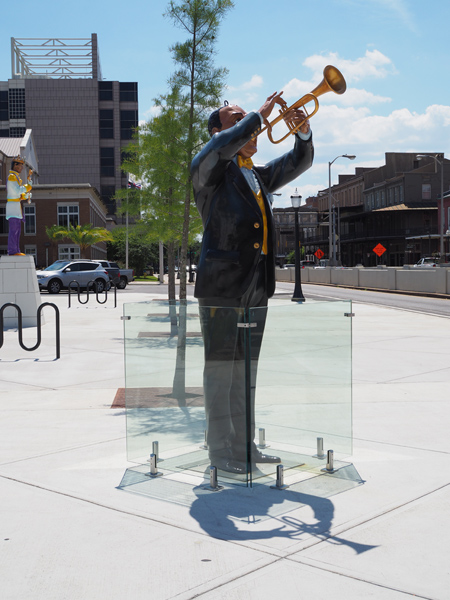
Mobile, Alabama is even older than New Orleans which will celebrate its tricentennial next year. Mobile was established North of today's location as early as 1702 and was moved to the current site – where the Mobile River flows into Mobile Bay. Mobile was the first capital of the French Louisiana Territory. In 1720 the capital was moved to Biloxi and two years later to New Orleans.


Mobile and New Orleans share the French origins and the founding father: Jean-Baptiste Le Moyne, Sieur de Bienville. Thus they share catholicism that comes with a centrally located cathedral as well as with the celebration of Mardi Gras. Some of the architecture in downtown appears to be comparable as well as street names (Dauphin vs. Dauphine) and a knack for going out and having fun.


Some impressions of historic homes in the – very small – downtown area.


Even though some street names sounded familiar, nobody was able to tell me why one street in downtown had the German name Joachim. They just told me about the right way to pronounce it (unfortunately I forgot – but the guy in the tourist office said that they pronounced it differently than anywhere else in the US).


Wednesday, June 14, 2017

Agriculture II: Grass-fed Cattle


The Alabama Black Belt as well as Hale County seem to be different from other areas in Alabama as driving through one encounters a lot of open land: either catfish ponds or vast stretches of grass where cattle feeds. The other areas of Alabama are mostly covered with forests, namely pine trees, that are one of the major commodities produced in Alabama.


Cattle is usually outdoors feeding on fresh grass. Some farmers also make hay and additionally feed that during the cold season. However, as Alabama has a very mild climate the cattle stays outside year round. As cattle is raised for meat production calves remain with their mothers.


Visiting a small farm I was able to get very close to the cattle. We were in the fields with a small dog which attracted a lot of attention from the young ones who seem to be very curious about creatures smaller than themselves.


When some additional feed was brought out, it seemed as if the poor animals had not fed during the entire day despite standing in the middle of abundant pasture.


Maybe it is my agricultural ancestry that gets me excited over these beautiful creatures…


Agriculture I: Catfish

photograph taken in 2013: the wall has been repainted since


When Walker Evans and James Agee worked in Hale County, agriculture was cotton. Tenant farmers also grew corn, as well as fruits and vegetables for their own consumption. Cotton days are long gone now. Cotton was replaced by pine trees, grasslands for grass-fed cattle, and catfish.


Catfish farming is possible due to the thick layer of clay underneath the black soil that provided the Alabama Black Belt region with its name. The clay layer does not permit water to go through which makes it relatively easy to create large ponds: Dig a hole and wait for rain. There are also many rivers and creeks to maintain water quality.

Alabama catfish industry started in Greensboro in 1960 with a small hatchery. That is why Greensboro is advertised as the Catfish Capital of Alabama. Today many catfish ponds cover the area. However, Alabama catfish industry keeps facing difficulties due to the competition from Vietnam that ships cheap catfish to the US.

Catfish is relatively easy in maintenance, they need to be fed only once a day. After about two years the fish can be harvested, a procedure I was able to watch near Greensboro last week. The fishes are taken out of the pond with a huge net and brought into a tank filled with cool fresh water and oxygen. They are then driven to a processing plant in Mississippi where they are electrocuted and further processed for shipping.


And this is how a small one looked that somehow slipped out of the net.


Wildlife I

Snowy Egrets


There are quite a few animals that I keep seeing in the area, of course many birds but also bugs. As it is difficult to photograph the birds, I cannot show any great photographs of them. I tried to photograph the Black Vulture, a large black bird that feeds on roadkill, but without a telephoto lens I so far had no chance to catch one. I love the bright red Northern Cardinal and the Blue Grosbeak and I keep seeing Great Egrets at the catfish ponds, but so far I haven't caught one. I will update this post if I do.

In the picture above the white birds should be Snowy Egrets. I photographed them in the Louisiana wetlands, but I'm sure I have seen them also in the catfish ponds.

Southeastern Lubber Grasshopper


There are quite a few bugs around, the grasshopper was a big guy, maybe around 5 cm long (2 inches). And I have seen quite a few of them.
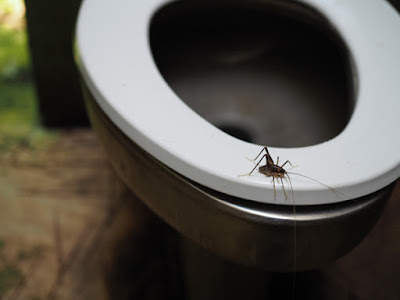
Spotted Camel Cricket


I encountered this cricket in Perry Lakes Park. The bathroom has no roof, therefore it is no surprise that crickets may find it interesing to explore.

Margined Leatherwing Soldier Beetle


Midland Smooth Softshell Turtle


I don't know where the turtle came from, but I found it in the grass beside the sidewalk on Main Street in Greensboro. Later that day the lawn was mowed, I hope the turtle found its pond before that happened.

I am not sure if my classification of the photographed species is right. Please leave comments if I am wrong.

ADDENDUM: Looking through my pictures I found one of a great Egret – again, sorry for not having a telephoto lens. I photographed this one from the ferry in Gee's Bend crossing the Alabama River.

Great Egret


Wednesday, June 07, 2017

Gee's Bend


The small town of Boyton in Wilcox County is situated in a horseshoe shaped bend of the Alabama River that surrounds it on three sides. Therefore it is a rather secluded area. It is probably one of the poorest towns in the poorest county in Alabama.


Today Gee's Bend is first and foremost known for its Quilters Collective. The quilters of Gee's Bend make uniquely designed quilts that are shown in exhibitions in the Smithsonian and other museums in the US and abroad.


Gee's Bend was named after the first plantation owner, the plantation was later taken over by a family named Pettway. After the abolition of slavery the former slaves kept working the land as tenant farmers and took the name of their former owner, thus today you can still find the last name Pettway in the area.

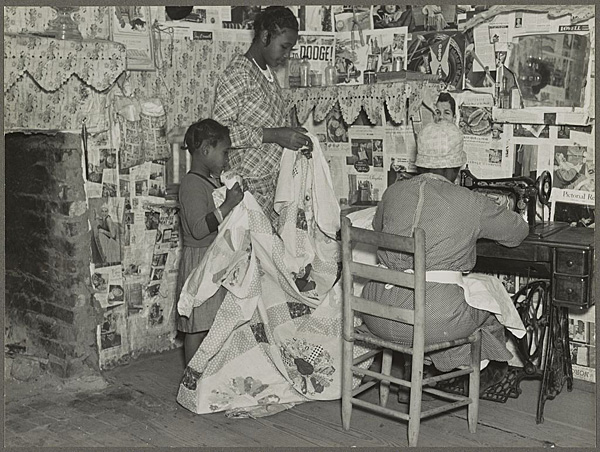
Arthur Rothstein: Sewing a quilt. Gees Bend, Alabama. Jennie Pettway and another girl with the quilter Jorena Pettway,
April 1937, https://www.loc.gov/resource/ppmsca.31901/
Known for its isolation the Resettlement Administration started to help the community in 1935. They built houses, a school, and passed out loans to help the farmers.


Once again, I got to know this location through the photography of the Farm Security Administration (FSA), namely the pictures of Arthur Rothstein and Marion Post Wolcott who worked there in 1937 and 1939. Apart from documenting the people of Gee's Bend, the old cabins, and the newly constructed buildings, Rothstein also made a picture of a quilter. Marion Post Wolcott also documented the ferry which, for a long time, was more or less the only possibility to get to the next town named Camden.

Marion Post Wolcott: Cable ferry from Camden to Gee's Bend, Alabama, May 1939, https://www.loc.gov/item/fsa2000031896/PP/

Marion Post Wolcott: Project manager's truck coming across on ferry from Camden to Gees Bend, Alabama, May 1937, https://www.loc.gov/item/fsa1998012459/PP/


In 1962, during the Civil Rights Movement, the ferry service was stopped because people from Gee's Bend were traveling to Camden by ferry in order to register as voters. Without the ferry they had to drive for more than one hour to get to Camden. Eventually there was no ferry service for 44 years. Only as late as 2006 ferry services resumed.


The ride on the ferry takes about 15 minutes.